Feyishola Jaiyesimi – May 7, 2026. Source- Business Day
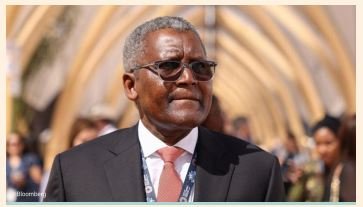
Aliko Dangote, the billionaire industrialist behind Africa’s largest industrial conglomerate, has unveiled an ambitious plan to generate 20,000 megawatts of electricity — a move that could significantly reshape Nigeria’s chronic energy deficit. In a conversation with International Finance Corporation Managing Director Makhtar Diop, Dangote outlined the project, marking a major expansion of his industrial footprint beyond oil refining and cement. He emphasized that Africa needs energy, fertilizers, and industrial inputs to drive development. This announcement follows his commissioning of a 650,000-barrel-per-day refinery and his growing dominance in the fertilizer market. Dangote noted that his operations are becoming asset-light and generating strong cash flow. Nigeria has a long history of failed government promises in the power sector. Former Power Minister Adebayo Adelabu once pledged 6,000 megawatts by 2024, but actual supply remains around 3,331 megawatts — barely enough for a population of 200 million people who rely heavily on diesel generators. World Bank data suggests that erratic power costs the Nigerian economy roughly $29 billion annually — about 10% of its GDP. The government briefly hit a record 6,003 megawatts in March 2025, but the milestone was short‑lived due to infrastructure vandalism and a dysfunctional gas supply chain.
Nigeria’s transmission network remains a major hurdle. The grid can only reliably carry about 8,000 megawatts before risking collapse, meaning the state‑controlled transmission system could become a bottleneck that prevents power from reaching factories and homes. The sector also faces a liquidity trap: distribution companies struggle to collect revenue, leaving unpaid invoices that trigger gas shortages at thermal plants. Dangote may need to rely on his own gas assets and LNG capabilities to stabilize supply, though regulatory challenges still pose obstacles.
The billionaire’s strategy appears rooted in vertical integration. By expanding into potash and phosphate mining in Congo and Brazil, and building a deep‑sea port, Dangote is positioning his empire to be its own largest customer. ‘The needs of Africa are petroleum products and fertilisers,’ Dangote said. ‘Today, in about two and a half years, we will be the largest fertiliser company in the world. We are putting up 12 million tons of urea. We are opening up mines of potash and phosphate in Congo and Brazil. We are building the biggest deep‑sea port with an 18‑meter draft. We are doing LNG.’ However, the scale of a 20,000‑megawatt project would require a total overhaul of Nigeria’s energy policy and a level of private‑sector coordination that has eluded the country since the 2013 privatisation of the sector. For now, the market remains skeptical of any timeline that does not account for the structural rot of the national grid.